Old buildings don't behave like modern ones. A Georgian townhouse in the Golden Triangle, a flint-and-brick cottage out towards the coast, or a timber-framed farmhouse in South Norfolk was built to breathe. It takes up moisture and lets it go again through soft mortar, porous brick and lime plaster. Repair one with modern cement, hard render or plastic paint and you trap that moisture inside the wall, where it does much more damage than the problem you set out to fix.
HD Building Services is a Norwich-based building firm with around nine years of hands-on experience working on heritage and period property, using traditional materials and methods appropriate to the age of the building. We work on listed buildings, properties in conservation areas, and the thousands of unlisted-but-historic homes across Norfolk that still need to be repaired the old way. Everything is quoted clearly and itemised up front, and we're fully insured on every project.
Heritage building work we take on
Whether it's a single failing wall or a whole-property programme of repair, the same principle applies. Do the least you can get away with, match the original materials, and make sure the building can still dry out.
Lime Mortar & Repointing
Hand-raked joints, lime mortars mixed to suit the wall, and pointing profiles that match what was there originally. More on repointing →
Traditional Brick & Flint
Rebuilding, stitching and piecing-in to soft red brick, knapped and cobble flint, carrstone and clay lump, matched to the existing coursing and bond.
Structural Repair
Cracked and bulging walls, failed lintels, wall tie replacement, underpinning liaison, and careful stitching of historic masonry rather than wholesale rebuild.
Lime Render & Plaster
Removing cement render that's holding damp in, and replacing it with breathable lime render, haired lime plaster and limewash finishes.
Heritage Roofing
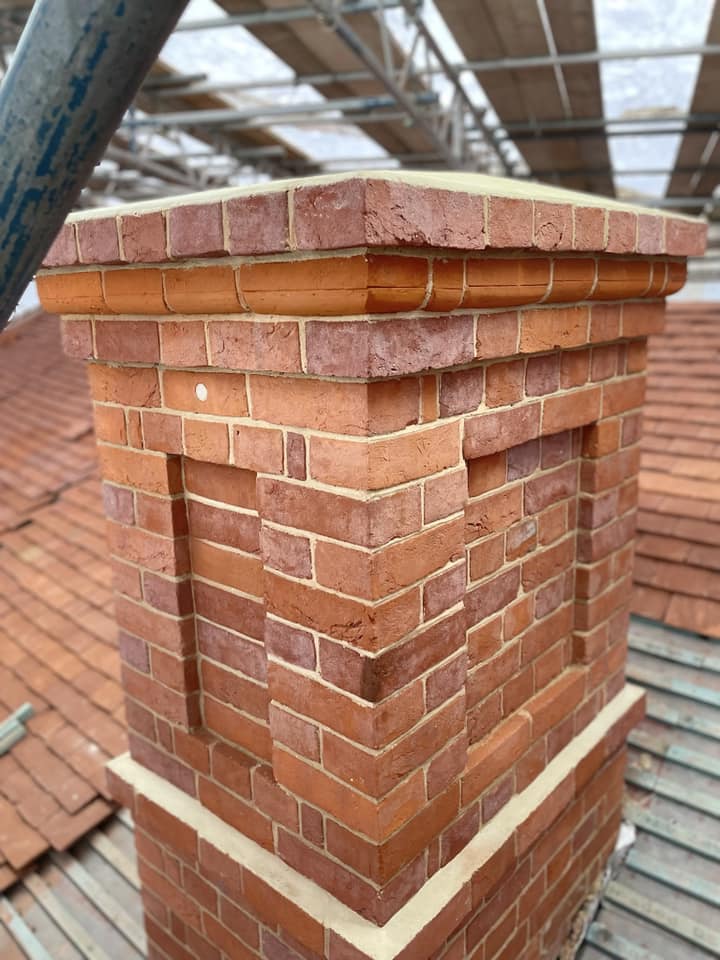
Norfolk pantile and clay peg tile roofs, leadwork, chimney rebuilds and flashings. More on roofing →
Full Restoration
Whole-house programmes on period property, from damp diagnosis through to sympathetic modernisation. More on restoration →
Why traditional materials matter
This is the single biggest issue we're called out to fix, and it's almost always the same story. At some point in the last few decades, someone repointed a soft old wall in hard cement mortar, or rendered it in sand-and-cement, or painted it in modern masonry paint. It looked tidy for a few years. Then the damp appeared.
A solid wall has no cavity and no damp-proof course. It gets rid of moisture by letting it evaporate away, and the mortar joints are the escape route. Lime mortar is meant to be softer than the brick or stone around it, so it takes the wear, the movement and the salts, and can be replaced when it has done its job. Cement is harder than the masonry. When moisture can't get out through the joint, it goes out through the face of the brick instead. Come the first hard frost, that face blows off. Once you have spalled brickwork, you're into replacing bricks rather than replacing mortar.
Crumbling or powdery brick faces, damp patches that appear at high level rather than low down, blown or hollow-sounding render, salt deposits on internal plaster, and mortar that's visibly harder and greyer than the surrounding wall. If any of that sounds familiar, it's worth getting it looked at before the next winter.
"Most of the heritage jobs I get called to started as somebody else's repair. Cement pointing on a soft old wall, or a bit of hard render slapped over damp brickwork. The owner's usually been told they've got rising damp. Nine times out of ten they've just got a wall that can't dry out any more."
Working on a listed building in Norfolk
If your property is listed, the rules are stricter than most owners expect. Listing covers the whole building, inside and out, not just the front elevation, and it can extend to outbuildings, walls and other structures within the curtilage. Works that affect the building's special character need listed building consent from your local planning authority, and carrying them out without consent is a criminal offence, not just a planning breach.
So repointing, render, window and door work, internal layout changes and roof coverings can all need consent, even where the same job on an unlisted house would be permitted development. The grades run Grade I, Grade II* and Grade II, with Grade II covering most of listed homes.
Which authority you deal with depends where you are. Norwich City Council, Broadland, South Norfolk, Breckland, North Norfolk, Great Yarmouth, or King's Lynn and West Norfolk. We're happy to talk through what's likely to need consent, to provide the sort of specification detail a conservation officer will want to see, and to work to whatever conditions are attached. What we won't do is start unconsented work on a listed building and leave you carrying the risk.
Plenty of Norwich streets sit inside conservation areas without the individual houses being listed. That still restricts permitted development rights, demolition and tree work, and your council can apply an Article 4 direction that tightens things further. Worth a check before you commit to anything.
Norfolk's traditional building materials
Norfolk has a building vernacular of its own, and matching it properly is most of the job. We work regularly with:
- Flint. Cobble, field and knapped flint, in lime mortar, including galletting and flushwork panels. Getting the mortar colour, joint width and knapping right is what separates a repair that disappears from one you can spot from the road.
- Soft red brick. Norfolk reds and hand-made stocks, laid in Flemish and English bond, with reclaimed or specially matched bricks for piecing-in.
- Norfolk pantiles. The classic East Anglian roof covering, plus clay peg tiles and the leadwork and flashing detail that goes with them.
- Carrstone. The ginger-brown stone found across West Norfolk around Snettisham and Hunstanton.
- Clay lump. Unfired clay block, common in South Norfolk, which needs breathable render and limewash and is easily ruined by cement.
- Lime plaster and limewash. Haired lime plaster on lath internally, and traditional limewash and breathable mineral paints externally.
How we approach a heritage project
Heritage work goes wrong when someone turns up with a fixed idea and a mixer full of cement. Our approach is slower at the start.
- Look first. A free site visit to understand the building, its age, its construction and what has been done to it before. Very often the fault is a previous repair.
- Diagnose the cause, not the symptom. Damp is a symptom. Cracking is a symptom. There's no point redecorating around either until we know what's driving it.
- Agree a specification. Mortar mixes, sands, tile types, pointing profiles, all written down before we start, so you know exactly what's going on your building and so does your conservation officer if one is involved.
- Sample panels where it matters. On visible elevations we'll put up a sample area so you can see and approve the finish before we do the whole wall.
- Work to the weather. Lime has a season. We plan external lime work to avoid frost and protect new work properly while it cures.
- Leave it clean. Old buildings are usually lived in while we work. We keep dust down, protect what we're not touching, and tidy up as we go.
Areas we cover
We're based in Norwich and cover the whole of Norfolk for heritage and listed building work, including:
If you're just outside Norfolk and the job is the right fit, ask anyway. We travel for heritage work.